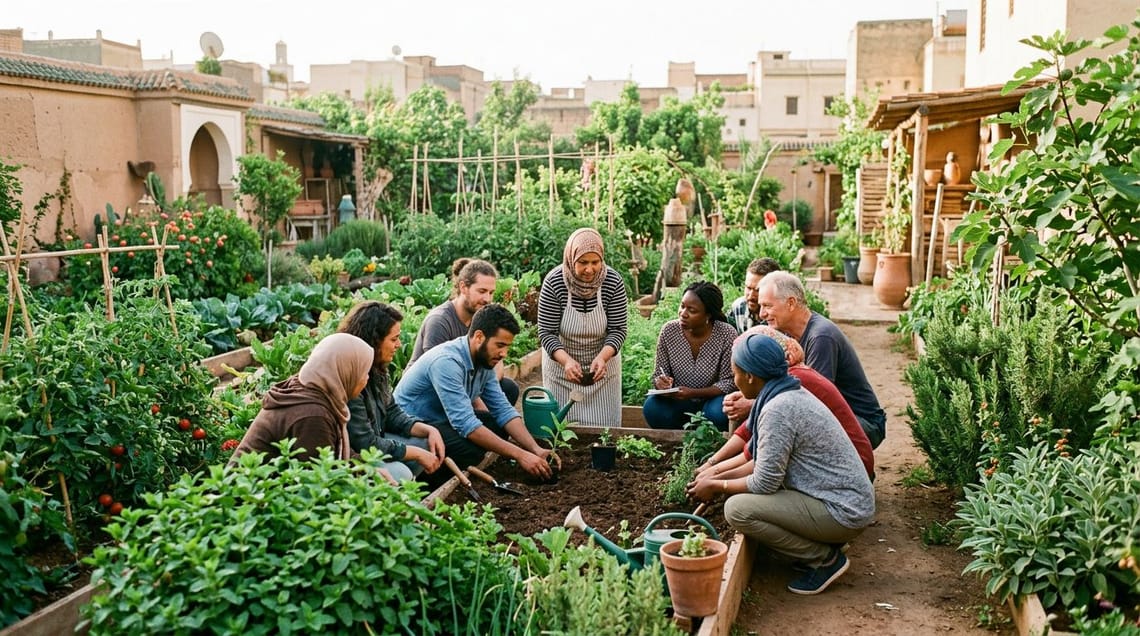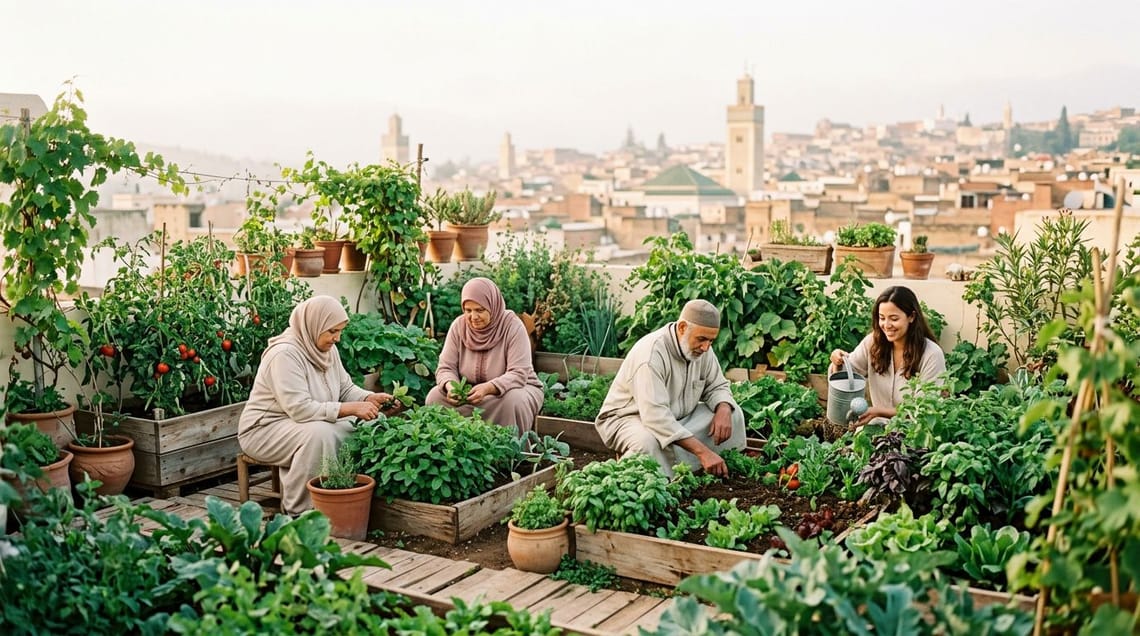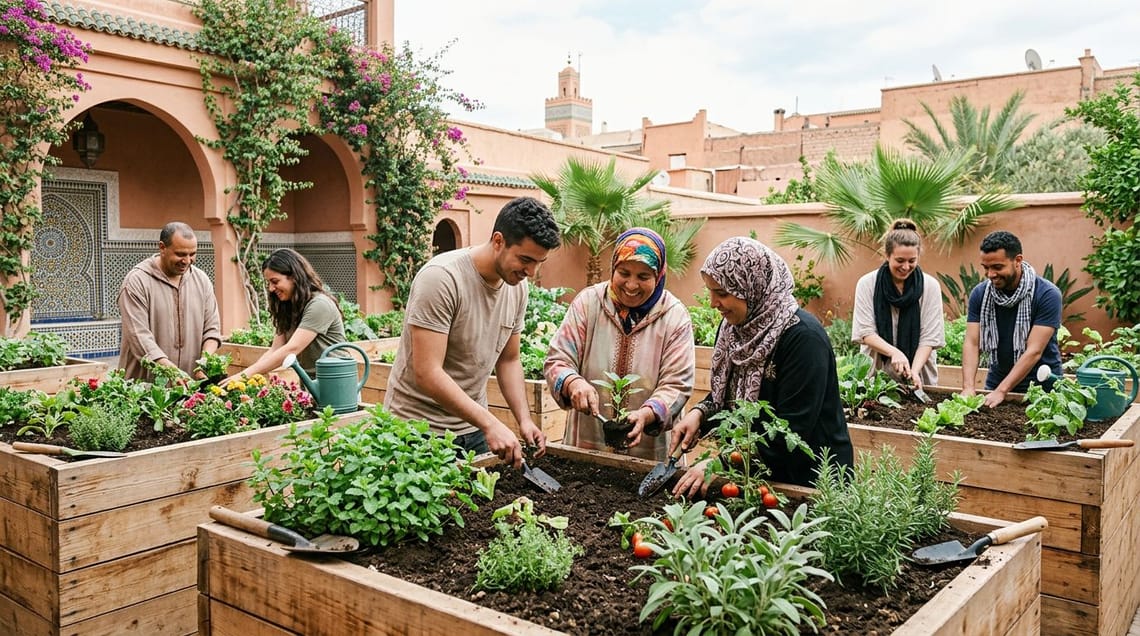
Amid the vibrant chaos of Morocco's urban centers, a quiet revolution is sprouting. Community gardens are transforming forgotten corners into thriving ecosystems and social sanctuaries. These green spaces are not mere patches of cultivated land; they are reshaping cities by nurturing local agriculture, boosting biodiversity, and forging strong community bonds.
The Growth of Urban Gardens Across Morocco
In the bustling streets of Rabat, Casablanca, and Marrakech, community gardens are emerging as green refuges amidst the concrete sprawl. Rooted in Morocco's rich agricultural heritage, these urban oases are a modern twist on traditional gardening practices, offering a breath of fresh air and a taste of homegrown produce.
These gardens symbolize resilience and innovation, providing a sustainable counterbalance to urban expansion. As more city dwellers embrace community gardening, they discover the joys of fresh harvests and a deeper connection to the natural world.
Community Gardens: Cultivating Social Bonds
These gardens are vibrant social hubs where neighbors gather, share experiences, and grow together. In the bustling city of Fez, for example, a community garden has become a popular venue for weekend markets and educational workshops. Here, diverse groups come together, bridging cultural and generational gaps.
Successful initiatives, such as the Agdal Garden in Rabat, demonstrate the power of community-driven projects. These gardens not only provide a space for growing food but also serve as venues for cultural exchange and community events. They are places where friendships blossom as easily as the plants.
Enhancing Urban Biodiversity Through Local Agriculture Initiatives
In a rapidly urbanizing world, community gardens offer essential sanctuaries for local wildlife. By incorporating native plants and creating habitats, these gardens support a variety of flora and fauna. The Jardin Jnane Sbil in Fes is a prime example, where efforts to promote biodiversity have led to a flourishing ecosystem within the city.
Strategies employed by these gardens include planting a mix of indigenous species and setting up pollinator-friendly environments. Such efforts have transformed urban areas into ecological havens, contributing to the preservation of Morocco's natural heritage.
Engaging Youth and Volunteers in Community Farming
Community gardens are nurturing a new generation of environmentally conscious citizens. Programs designed to involve young people in gardening are sprouting up across the country. In Marrakech, the "Green Hands" initiative invites students to participate in planting and maintaining garden plots, fostering a sense of responsibility and connection to the environment.
Volunteering in community garden projects offers numerous benefits, from learning sustainable farming techniques to developing leadership skills. Partnerships with local schools and organizations have been instrumental in expanding these opportunities, ensuring that the gardens remain active and thriving.
Sustainable Food Practices: A Model for the Future
Community gardens in Morocco are champions of sustainable agricultural practices, offering a blueprint for responsible food production and consumption. By promoting organic farming methods and local food systems, these gardens educate residents on healthy eating and sustainable living.
The long-term benefits of these practices are significant, contributing to urban food security and reducing reliance on imported goods. As more communities embrace these models, the future of urban gardening in Morocco looks promising, paving the way for healthier, more resilient cities.
As the sun sets over a serene community garden, the day's efforts give way to a tranquil scene where people relax and reflect. These gardens are more than just a trend—they are a vital part of Morocco's urban tapestry, offering hope and sustenance in a rapidly changing world. Consider visiting a local community garden or starting your own to be part of this transformative movement.